It’s 11 PM on a Sunday. You’re deep in two tournaments, ITM in a third, and your body stopped cooperating hours ago. Six hours of grind behind you. Your back aches, your eyes burn, and there’s this unsettling feeling that you’re looking at the cards but not really reading them.
Then the spot comes. BB defends, connected board, villain barrels turn and river. You call. Showdown — he had the obvious nuts. And you sit there thinking: “At 7 PM I fold this without a second thought.”
It wasn’t tilt. It wasn’t a study gap. You know the range, you know the EV, you know the theory cold. What failed was the hardware. Your brain running on low glucose, cortisol stacked from eight hours in a chair, and your decision-making capacity draining away at exactly the moment the real money is at stake.
That’s the leak nobody puts in the HUD. It doesn’t show up in a solver. There’s no range chart for it. It’s your body giving out before your mind does — and dragging your mind down with it.
We talk a lot about mindset, tilt, and Deliberate Practice around here. But underneath all of that is a layer most MTT players ignore completely: the physical foundation that holds everything else up. And the science on this isn’t vague or motivational. It’s concrete. Let’s look at what training your body actually does for your game.
Why Your Body Calls the Shots at Hour 7
There’s one thing no solver shows you: your decision-making capacity is a finite resource. Not a metaphor — biochemistry.
Every decision you make in a session burns brain glucose. Multiply that by hundreds of spots, eight open tables, ICM running in the background, and you hit hour 7 on empty. The technical term is decision fatigue. In practice, it means your brain starts choosing the cheapest path — and the cheapest path is almost never +EV.
Add cortisol to the mix. Eight hours sitting, variance punching you, emotional swings stacking up. Baseline cortisol rises and stays high. When it’s elevated, the part of your brain responsible for cold analysis — the prefrontal cortex — loses ground to the reactive system. You start playing on impulse without realizing it.
Here’s where most players get it wrong: C-game doesn’t only show up because of tilt. It shows up from pure physiological exhaustion. You can be emotionally calm, zero recent bad beats, and still play the worst poker of your life — simply because the hardware is overheating.
Take a player grinding $22 buy-ins, deep in a $22 Bounty at 11 PM. The same spot he crushes on autopilot at 7 PM becomes a crying call at 11 PM. Not because he forgot the theory. Because his body already clocked out and took his reads with it. Glucose is low, focus is scattered, and the range chart he’s reviewed a thousand times just won’t load when it counts.
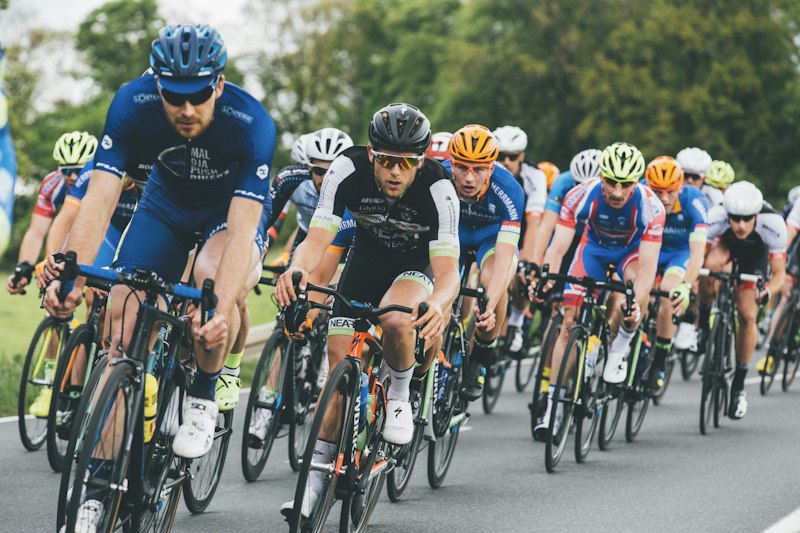
Training doesn’t fix this by magic. It increases the size of the tank. It pushes the decline curve later and makes it fall more gradually. That’s what we’re here to talk about.
The 3 Benefits That Matter Most for MTT Players
There’s a lot of exercise benefits that don’t move the needle for grinders. You’re not trying to win a marathon or get shredded for a photo shoot. What matters is what changes things in the chair, in the final hours of a Sunday session. These three do exactly that.
Cognitive Endurance for Long Sessions
Aerobic exercise increases blood flow to the brain. More blood, more oxygen, more glucose reaching the machinery that makes decisions.
For the MTT player, that means one thing: you sustain your A-game longer. The fatigue curve we described above shifts. Where C-game used to hit at hour 6, it starts hitting at hour 8. And in tournament poker, the final hours are exactly where the real money lives — final table, bubble, heavy ICM spots.
Players with better aerobic conditioning process information faster under fatigue. That’s measurable, not opinion. And for someone playing 6, 8, 10 tables at once, processing fast under fatigue is literally the game. More volume without quality dropping. That’s the equation. You don’t play more tournaments by sacrificing edge — you play more tournaments while keeping your edge intact until the end.
Emotional Regulation and Tilt Control
Regular exercise lowers baseline cortisol. Lower cortisol means your emotional threshold rises — the point where a bad beat actually gets to you moves further away.
This isn’t a tilt cure. Anyone selling exercise as a tilt antidote is lying to you. What training does is act as a shock absorber. The same cooler that would send you straight into monkey tilt on a rough Monday after a bad night’s sleep hits a more resilient body with a softer reaction. You still feel it. You just respond less.
Think of it this way: Tendler’s mental game work teaches you to inject logic when emotion spikes. Exercise makes the emotion spike more slowly in the first place. They work together. One treats the software, the other strengthens the hardware the software runs on.
For anyone grinding through a brutal downswing, that’s everything. The difference between reacting and responding — in a lot of spots — is purely physiological. A rested, trained body gives you that extra half-second before you punish the call button.
Better Sleep = Real Recovery
People who train sleep better. Deep sleep is when your brain actually recovers — it consolidates memory, clears metabolic waste, and recharges your ability to focus the next day.
The math is simple. Bad night tonight, guaranteed C-game tomorrow. You sit down already in cognitive debt, and no amount of coffee pays that debt back in full. Training breaks the cycle: a body tired in the right way sleeps better, recovers better, plays better. It’s the compound interest of performance.
The “Mental Athlete” Myth and What the Science Actually Says
Here’s the counterintuitive part. You don’t need to become an athlete. No CrossFit required, no ketogenic diet, no macro counting.
The “poker is a sport” industry overplayed its hand. It became an excuse to sell supplements and let fitness influencers post fasted workout routines as if they were secret edge. The reality is more grounded: 20 to 30 minutes of moderate activity a day already moves the needle. A brisk walk counts. The marginal return on that first half-hour is enormous. Beyond that, the curve flattens fast — you’re optimizing general health, not poker performance specifically.
The point was never to become a marathon runner. The point is to keep the hardware functional enough to sustain eight hours of quality decisions. That’s a low floor, not a high ceiling. And because it’s a low floor, most people have no real excuse to ignore it.
Think of exercise as one of the 4 pillars of performance — not the central pillar that replaces study and mental game, but the base that holds the other three upright. Neglecting that base doesn’t make you play worse at hour 1. It makes you collapse at hour 7. And hour 7 is where Sunday gets decided.
Anyone promising that training converts directly into EV is selling fantasy. Anyone ignoring training is quietly donating edge in the final hours without knowing it. The truth sits in the middle, and it’s less exciting than either extreme.
How to Fit Training Into a Grinder’s Routine

“I don’t have time” is the default excuse. But MTT players have an obvious window: before the session. A short pre-grind workout functions as a physical-mental warm-up. It activates the body, wakes up the brain, and puts you in the chair already alert instead of dragging yourself in cold.
That maps directly onto the pre-session routine. Elliot Roe’s A.G.A.M.E. Pre-Session Protocol covers mental activation — attention, goals, activation, meditation, elimination of distractions. Physical activation complements exactly the “A” in Activate. You raise your heart rate, oxygenate your brain, and start the session with the engine already warm instead of cold-starting it mid-tournament.
Some concrete ways to fit it in:
- 20-minute walk before opening the tables. No equipment, no gym, works as a double warm-up: body and mind.
- Mobility during breaks. Every tournament break is a chance to stand up, stretch your spine, shake out your legs. Five minutes of movement every hour changes your entire hour 7.
- Short, moderate workout pre-grind. 25 minutes of moderate exercise on a rest day or before a session. No gym needed — bodyweight works fine.
The classic mistake is skipping the workout “to play one more tournament.” Feels like volume optimization. It’s a false EV economy. You trade 30 minutes of activation that would sustain your A-game for extra hours of C-game donating chips. The math doesn’t work. That extra tournament you registered for while tired probably cost more in bad decisions than the late reg fee was ever worth in expected value.
Think of training as part of your energy bankroll, not an expense. You don’t cut sleep to grind more — or at least you shouldn’t. Same logic applies to your body. It’s infrastructure, not a luxury.
What to Track to Know It’s Working
ROI won’t work here. Variance is too large, sample size too small, and you’ll never isolate the effect of training on financial results in any useful timeframe. Track something else.
Track your decision quality in the final hours. After each long session, note it: in the last two hours, were you playing at the same level as the first two? Where did you feel focus slipping? Did you make any calls you know you wouldn’t make rested? That’s real data about your hardware.
Also do a subjective energy check-in. Rate yourself 1 to 10 at the start and end of each session. Cross-reference the weeks you trained against the weeks you didn’t. The pattern shows up fast — and when it does, it’s more convincing than any ROI graph ever will be.
That kind of tracking is at the heart of grinding sustainably. You stop treating your body as an invisible variable and start treating it as a performance metric. What you don’t measure, you ignore until you crash.
Conclusion
Here’s what nobody tells you straight: exercise doesn’t make you play better.
It stops you from playing worse when your body gets tired. It’s a defensive benefit, not an offensive one. You don’t become a solver genius because you walked 20 minutes. You simply don’t fall apart at hour 7, when the entire Sunday grind is on the line and your edge depends on keeping your decisions cold while the rest of the table fries right alongside you.
That’s exactly where the value lives. Everyone in the field gets tired at the same rate. The reciprocal difference — what separates you from the player next to you — is who tires more slowly. Who keeps the A-game running when everyone else is on autopilot donating chips. That’s an edge that doesn’t exist in any chart, and one most of your opponents don’t even know is available.
You don’t need to become an athlete. You need to stop treating your body as the one piece of the game that doesn’t deserve any attention.
Want to put this into practice? Poker Playbook has a 60-second daily check-in, AI Coach, and 4 Pillars of performance analysis. Start free at pokerplaybook.pro