It’s 2 AM. You just busted on the bubble of a $22 Bounty Builder with AK against a call no solver would ever approve. You’re absolutely furious. So you do what everyone does: you open the solver.
Forty minutes later, you’ve got 50 tabs open, you’ve run spots at 40bb, 25bb, 12bb, covered three different positions, and you have no idea what you actually learned. You close your notes. You go to sleep thinking you “studied.” You didn’t. You consumed output.
That’s the problem with AI in poker in 2026. The tools are everywhere. Pocket solvers, AI coaches, automatic database analysis — any $11 player has access to things a 2015 pro would have paid a lot to get. But having the tool isn’t the same as using it right.
Most players treat AI like a GTO oracle. They ask “what’s the correct play?” and memorize the answer without understanding why. Worse: they study spots that almost never come up in the real $22 field, ignoring the leaks that show up every single session.
We see this constantly. Smart, dedicated players putting in hours with the solver — and a flat graph. The effort isn’t the problem. The direction is.
AI used well doesn’t turn you into a range-spitting robot. It does something far more useful: it shows where YOU are leaking EV, in YOUR game, against YOUR field. The difference between those two approaches is what separates players who grow from players who just spend their nights staring at decision trees.
Where Most Players Go Wrong with AI in Poker
The first mistake is treating AI like an oracle. You play a tough hand, ask “what’s the correct play?”, get an output, write it down, and move on. It feels like studying. It isn’t. You memorized an answer without understanding the structure that produced it.
A solver doesn’t think about your situation — it solves a mathematical tree that assumes a perfect opponent. But the guy who called you on the $22 bubble doesn’t play perfectly. He called AK because he had a pair and was “pot-committed.” Memorizing the GTO output of a spot teaches you nothing about the adjustment that spot demands against a field that folds too much or calls too wide.
The second mistake is subtler — and more expensive. You study spots that never happen. You spend a late night optimizing big blind defense in a 4-bet pot from 60bb, when 80% of your volume is in tournaments with average stacks of 25bb and the recurring spot is shove-or-fold at 14bb. You’re sharpening a knife you’ll never use.
Here’s the counterintuitive take: most players should run less solver and analyze their own history a lot more. The solver shows you the theoretical ideal. Your database shows you where you, specifically, are bleeding EV every week. Guess which one moves the graph faster.
We covered this in detail in how to study poker efficiently in 2026 — worth reading if you still organize your study by “whatever you feel like that day.”

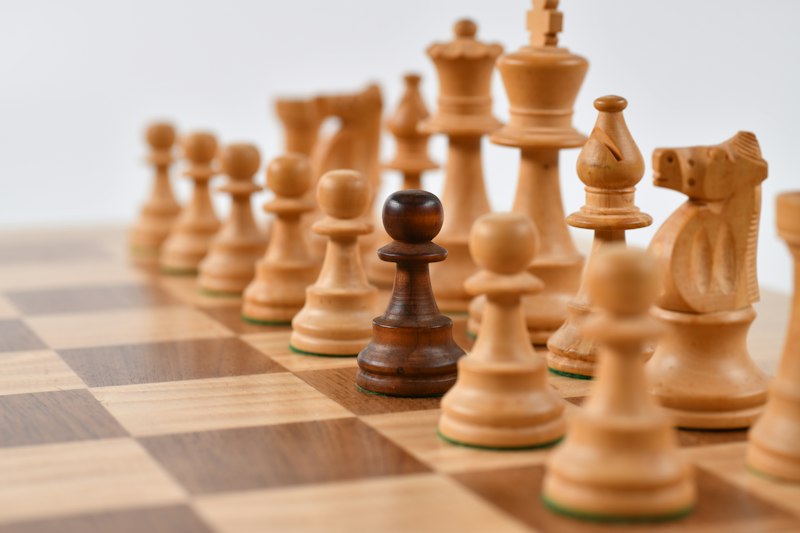
The image above is a portrait of unfocused studying: too many screens, zero focus. AI doesn’t fix that. AI amplifies it if you don’t come in with a clear question.
5 Ways to Use AI That Actually Move EV
Enough diagnosis. Let’s get to what works. These five applications share one thing in common: they all start from YOUR game, not from an abstract scenario.
1. Leak Analysis in Your Own History
This is the application that moves the most EV — and almost nobody uses it right.
The idea is simple: instead of running theoretical spots, you point AI at your thousands of real hands. The full database. The tool cross-references frequency, position, stack depth, and results, and delivers not “what’s the GTO play” — but “where do YOU deviate in a systematic, consistent way.”
A concrete example. A player with a $22 average buy-in, solid volume, graph stalled for three months. He was convinced the leak was postflop. He ran the database through AI and found something else: he was folding the big blind against a min-raise from the cutoff 23% more often than he should. Over 8,000 hands, that extra fold became a brutal EV leak — invisible session by session, obvious in the aggregate.
Why does this destroy a generic solver by a mile? Because the solver tells you the correct BB defense range. But it doesn’t know that YOU, out of habit or fatigue, are ditching too many hands in that specific spot. The leak isn’t in the theory. It’s in your repeated execution.
The solver shows the map. Your history shows where you always miss the turn.
2. Tilt Pattern Detection
AI isn’t just for strategy. It gives you data about yourself that you can’t see from inside a session.
Cross-reference time of day, session length, and decision quality. The pattern shows up fast. A typical case: a player with a healthy winrate in the first three hours, then a vertical drop after that. It’s not a skill problem — it’s fatigue quietly shifting into C-game without him noticing. The calls get worse, the hero-folds increase, the shoves get loose.
Jared Tendler describes seven types of tilt, and not all of them share the same trigger. AI won’t tell you “this is Mistake Tilt” — but it gives you the raw data that makes self-diagnosis possible. You see your decision quality crashing at hour four and you understand: the problem isn’t the game. It’s the hour.
Data without judgment. That’s what AI does well here.
3. Hand Review with Context
The difference between studying and memorizing lives in the “why.”
“Fold here” is an output. Useless on its own. “Fold here because villain’s range in this spot has your hand crushed the majority of the time he continues, and your blockers don’t cover enough” — that’s understanding. You take it to the next similar hand.
Good AI review explains the logic, not just the conclusion. It connects the spot to the opponent’s range, the board texture, the stack dynamics. When you understand the structure, you stop needing to memorize every case. You recognize the pattern and solve it on your own at the table, where there’s no solver to consult.
Use AI to ask “why,” not “what.” The right answer to the wrong question is still useless.
4. Building a Personalized Study Plan
Study time is a scarce resource. AI prioritizes what to study based on EV impact — not what seems fun.
Instead of studying whatever’s trending in Discord, you attack the leak that’s costing you the most across your volume. It’s Deliberate Practice with a target: less scatter, more return per hour invested.
5. Pre-Session Prep and Mental Game
AI also structures the mental side. It helps build a consistent warm-up and map the triggers that come before your worst decisions.
It doesn’t replace the work — it organizes it. If you’re still auto-piloting into sessions, mental preparation before the tournament is where the cheap EV lives. Five minutes of structure is worth more than a fifth solver tab.
What AI Does NOT Fix
Time for a dose of reality. AI is powerful, but it has hard limits — and pretending otherwise is like thinking expensive running shoes will get you through a marathon.
Execution discipline doesn’t come with the package. You can know the exact correct BB defense range and still fold too much at 2 AM because you’re tired and want to go to sleep. The knowledge was there. The execution failed. AI doesn’t sit in the chair for you.
Real-time decisions under ICM pressure, either. On the bubble, with 12bb, the table firing eliminations, you have seconds to act — the solver isn’t open. What decides it is what you’ve internalized and your ability to keep a clear head. AI prepares you beforehand. In the moment, it’s you and the timebank.
And the mental game doesn’t run on autopilot just because you understand the theory. Knowing what Injustice Tilt is doesn’t stop you from tilting after three bad beats in a row. Theory is the map. Feeling the emotion rising and not punishing your stack — that’s training, repetition, self-knowledge.
The honest take: the tool amplifies players who already have a method. It doesn’t fix players who don’t. AI dropped on a player without discipline just produces a player without discipline who has more data to ignore.

This is the gap nobody posts about: the theoretical EV you “know” versus the EV you actually realize at the table. AI shrinks the left side. The right side is on you.
How to Build a Study Flow with AI
Theory without a routine dies in a drawer. Here’s a practical weekly flow — adapt it to your volume, but keep the structure.
Monday: analyze leaks from the weekend. The bulk of your volume runs Saturday and Sunday. On Monday you run the recent database through AI and identify the two or three spots where you leaked the most EV. Not five, not ten. Two or three. Focus beats breadth.
Midweek: focused drilling. Take the priority leak from Monday and train it on purpose. If the problem is BB defense vs. min-raise, run that specific spot until the pattern is automatic. Targeted repetition, not random browsing through decision trees.
Pre-session: structured warm-up. Before each session, five to ten minutes of warm-up reviewing the week’s adjustments and calibrating your head. Entering sharp costs little and pays a lot.
Post-session: tag hands. Don’t review right away — you’re emotional and tired. Flag the relevant hands during the session and leave them for AI the next morning, with a clear head. Review done on tilt is biased review.
A real example of the flow in action. A player with a $33 average buy-in, playing $33 Bounties and $22 regulars on weekends plus a $16.50 Bounty midweek. Monday he discovers he’s overfolding the turn in 3-bet pots against aggressive players. Wednesday, he drills only that spot. Friday pre-session, he revisits the adjustment. Saturday, he executes. Sunday night, he tags new hands. Monday, he measures whether the leak closed. Closed loop, measurable, no wasted effort.
This cycle connects directly to the 4 pillars of performance: technique, mental game, physical health, and strategy operating together, not in silos. The flow ties all four into a weekly habit.
The difference between players who improve and players who don’t is rarely talent. It’s consistency of loop. The flow above isn’t brilliant — it’s repeatable. And repeatable beats brilliant over the long run.
AI Levels the Field — Discipline Tilts It Back
Here’s the insight that actually matters: AI doesn’t give you an edge. It levels the field.
Think about it. Most of the field from $11 to $109 already has access to the same tools you do. Pocket solvers, AI coaches, database analysis — it’s become a commodity. If everyone has it, nobody gets an edge just from having it. The tool stopped being a differentiator the moment it became accessible.
The real edge shifted. It’s no longer in having the AI. It’s in how you use it. Players who ask the right questions — about their own game, against their own field, with loop discipline — extract ten times more from the same tool as the guy running 50 solver tabs at 2 AM with no direction.
The whole field has the map now. The edge is knowing where to look on it. It’s attacking your real leak instead of the trendy spot. It’s reviewing with a clear head instead of on tilt. It’s closing the loop instead of starting ten and finishing none.
The tool leveled things. Discipline tilts them back. And that part nobody does for you.
Want to see your own patterns? Poker Playbook analyzes your grind with AI and shows where you’re leaking EV without realizing it. Try it free at pokerplaybook.pro